
Planting plans built for Bucks County conditions — heavy clay, real deer pressure, and winters that will find any plant chosen off a catalog photograph. Designed so the property looks better in year five than it did the week we finished.
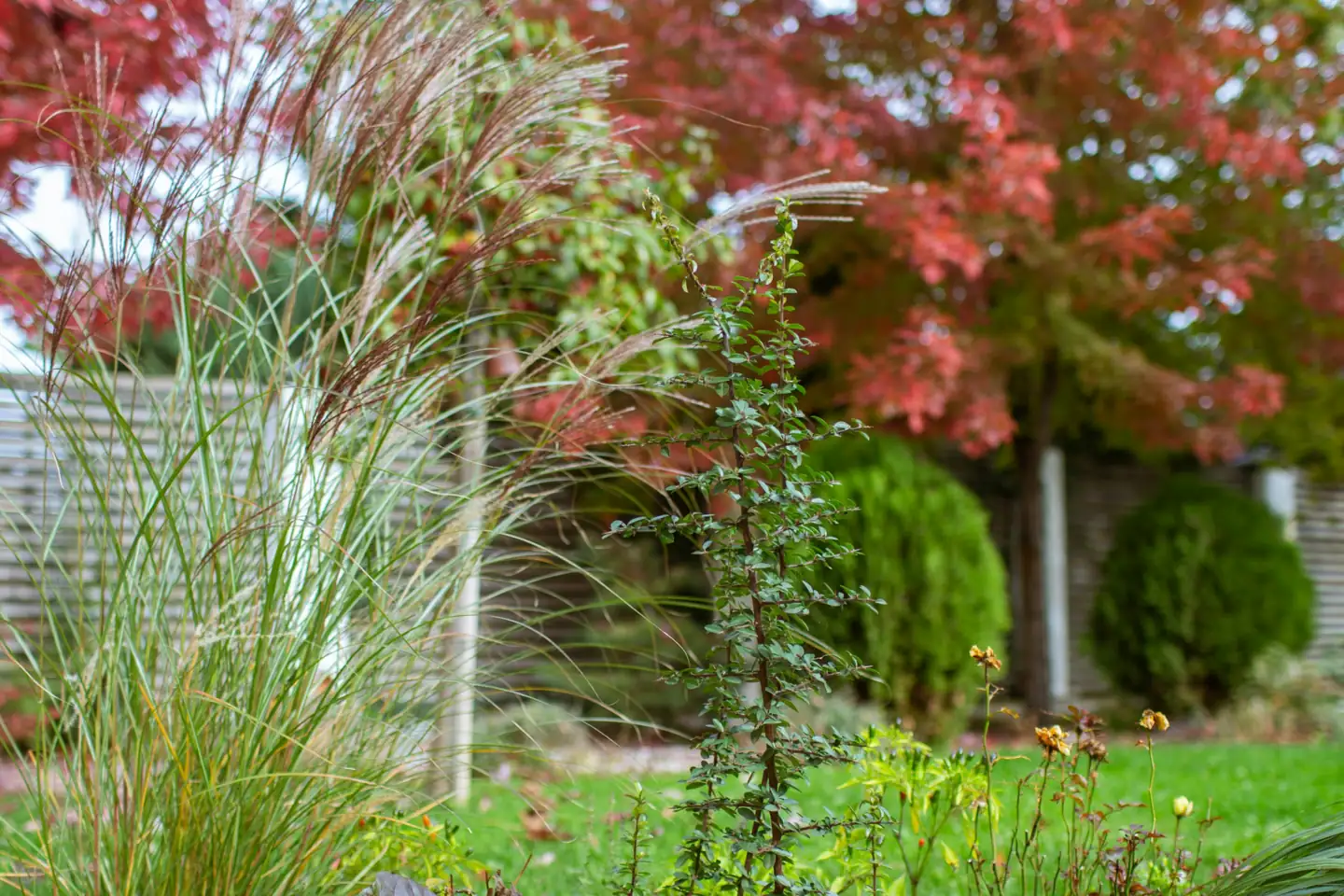
The failure mode of most residential landscaping is not ugliness. It is that it looks wonderful for one season and then falls apart, because the plants were chosen for how they looked at the nursery rather than for the ground they were going into. We would rather hand you something slightly less impressive on day one that is still filling in properly a decade later.
Designing for this county specifically
The clay
Much of Lower and Central Bucks sits on heavy clay soil. Dig a neat round hole in clay, drop a root ball in, and backfill with lovely soft compost, and you have essentially built a bucket — water runs in, cannot drain out through the clay walls, and the plant drowns slowly over two seasons. The fix is unglamorous: wide, shallow, roughened planting holes, backfill amended only modestly so roots are pushed outward into native soil, and beds raised where drainage genuinely will not cooperate.
The deer
North and east of Langhorne — Newtown, Upper Makefield, Washington Crossing, out toward Tyler State Park — the deer pressure is severe enough that it should drive the plant list, not merely inform it. Arborvitae, yew, hosta and tulips are, in these townships, an expensive way to feed wildlife. There is a long list of plants that hold up well and still look considered: boxwood, Japanese pieris, ornamental grasses, Russian sage, bayberry, inkberry, hellebore, catmint, spirea, viburnum. We will tell you honestly which of your favorites will survive where you live.
The winters
This is USDA zone 7a, near the boundary with 6b. Plants rated to 7 that get sold enthusiastically at big-box stores will come through most winters and then be killed outright by the one hard one. We design to the cold end of the range, so a bad February is a disappointment rather than a replant.
How the design process runs
- We walk it with you. Sun and shade through the day, how water moves in a storm, what you actually use the space for, what you cannot stand about it now.
- You get a plan. Layout, plant list with real species names and mature sizes, and phasing if the whole thing does not need to happen at once.
- An itemized estimate. Line by line, so you can drop or defer pieces without redoing the design.
- Installation. Beds shaped and edged, soil prepared properly, plants set at the correct depth — high in clay, never buried where the stems meet the roots — and mulched.
- A follow-up. We come back to check establishment, because the first season decides whether a planting takes.
What We Promise On Every Job
- We answer the phone. Miss us and you hear back the same day.
- Written estimate within one business day of walking your property.
- A message the day before every scheduled visit.
- Something not right? We come back — no argument, no charge for the trip.
Common questions
How much does a landscape design cost?
It depends entirely on scope, and anyone who quotes you a number over the phone without seeing the property is guessing. What we can promise is that the walk-through is free and the written estimate is itemized, so you can see exactly where the money goes.
When is the best time to plant?
Fall is the best window in this climate — soil is warm, air is cool, and roots establish through the dormant season without heat stress. Spring is the second-best. Midsummer planting is possible but needs a serious watering commitment from you.
Will deer eat what you plant?
If you are in Newtown, Upper Makefield or Washington Crossing, we will build the plant list around the assumption that they will try. No plant is deer-proof in a hard winter, but the difference between a thoughtful list and a careless one is the difference between some nibbling and total loss.
Can you work with plants I already have?
Yes, and often we should. Established shrubs that are simply overgrown can frequently be brought back with proper renovation pruning over two seasons, which costs far less than replacing them.
Do you handle the whole job or subcontract it?
We handle it. One company, one number, one party accountable if something is not right.
Tell us about your property
Start with a walk-through
Free, in person, and you will get an honest read on what the property can support.
Often needed alongside this
We work Bucks County only, within about twelve miles of Langhorne, including Newtown, Yardley, Washington Crossing, Holland and Richboro. See every town we serve →